

Looking for a better-than-average, market-beating performance from your next house?
Consider Butte, Fresno, or San Bernardino counties. Those three counties – and five others in the state – flipped from President Biden to President-elect Trump in the recent election, and that could help with housing values, according to the Journal of Real Estate Research.
The academic study – co-authored by Efren Cifci, an assistant professor of finance at Austin Peay State University in Tennessee, and Alan Tidwell, an associate professor of finance at the University of Alabama – found that counties that flipped from one party to the other generated market-beating home price gains during the next four years.
The findings are based on data from 2000 to 2020, when the party in the White House changed. The results were the same whether a Democrat or Republican was the president and lost the election.
WORKING HARD TO FLIP BACK – AND MAYBE INCREASE HOME VALUES?
Realtor.com determined that 84 counties, from Alabama to Arizona, fit the criteria, including eight in California.
Now, the research does not determine the cause for the increased value, but Tidwell says the losing party – such as the Democrats in the just-completed election – may focus on improving the chances to flip back the county. Quality of life issues, such as better schools and public safety, could become more of a priority for the party that was booted from the White House.
Now, before you buy-in on the study, a couple of caveats: Many issues affect home prices and values, from job-growth in the region to mortgage rates. Also, only one of these eight counties posted annual price gains that topped the statewide average of 5.8% in October. And two of the counties endured modest price drops, according to Realtor.com.
Bottom line: Many of these counties are prime for a price gain, especially since their median home prices are significantly lower than the statewide figure.
Check out the eight counties where President Biden defeated then-President Trump in 2020, only to lose to him four years later in November.
Red or blue, maybe you will enjoy some green.
Feature photo of a Menifee neighborhood in Riverside County. ADOBE STOCK
California counties that flipped in November could flourish with price gains
| County | Median home price | % change from a year ago |
|---|---|---|
| Butte | $429,900 | -2.2% |
| Fresno | $460,000 | +2.3% |
| Inyo | $562,450 | +4.9% |
| Merced | $465,000 | +7.2% |
| Riverside | $649,999 | +0.6% |
| San Bernardino | $530,000 | +2.9% |
| San Joaquin | $561,911 | -2.3% |
| Stanislaus | $520,000 | +4.0% |
Source: Realtor.com and the Journal of Real Estate Research
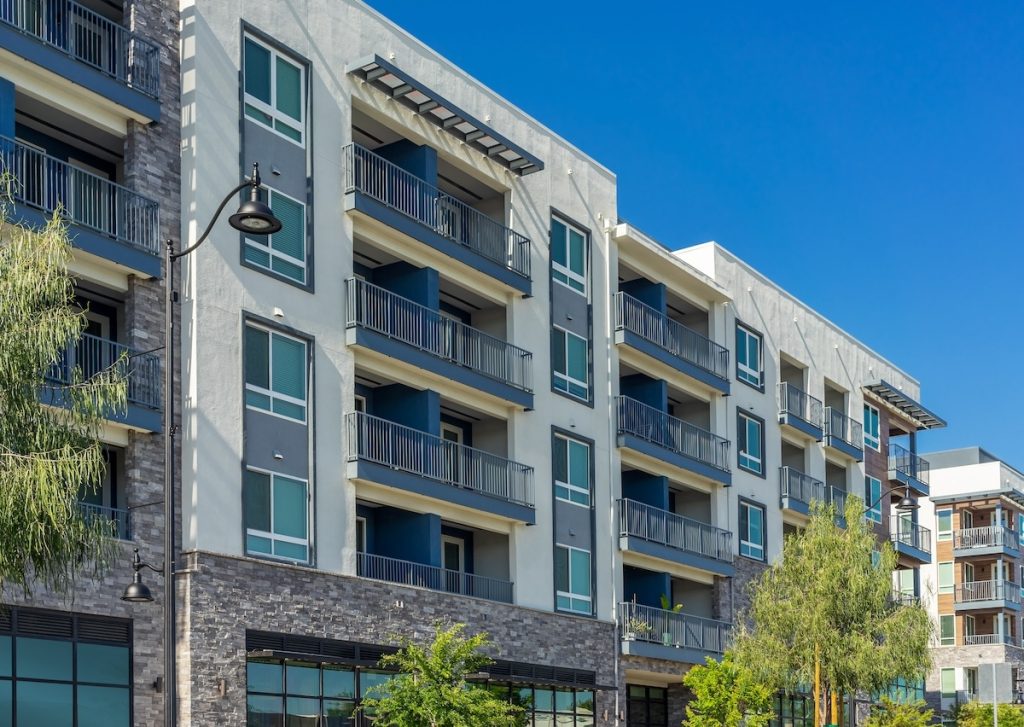
New apartment buildings are in demand, especially three-bedroom units. ADOBE STOCK
New apartments remain empty longer but still enjoy rent gains
Bigger is better. A lot better. At least when it comes to apartments and how fast they are leased.
And new apartments get the most love – and money. But they aren’t leasing as fast as in the past.
Redfin crunched data regarding new apartment communities and the most popular-sized units and found some interesting results.
THREE BEDROOMS, PLEASE
About 63% of three-bedroom apartments were leased within three months in new apartment communities this year, compared to 56% a year ago, according to Redfin. The demand for three-bedroom apartments – popular for developers and growing families easily outpaced the leasing for studio, one- and two-bedroom units.
Only 58% of two-bedroom apartments were leased in three months in new apartment communities this year, compared to 61% a year ago, the latest evidence of declining demand for rentals. About 52% of one-bedroom and 50% of studios were leased within three months, double-digit declines for both categories.
63%
Of three-bedroom apartments were leased in three months in 2024
56%
Of three-bedroom apartments were leased in three months in 2023
8,770
Three-bedroom units completed in 2024, 49% more than a year ago
The demand for apartments, especially in new communities, peaked during the pandemic. But the interest has eased this year. Only 58% of apartments – less than three of every five – in new buildings in the West were leased within three months, compared to 72% a year ago.
“Many new buildings started during the pandemic are due to come online in coming months,” says Redfin senior economist Sheharyar Bokhari. “With increased supply, owners are likely to continue offering concessions or even reduced rent to fill their newly completed buildings more quickly.”
NEW, PLEASE. AND TENANTS ARE WILLING TO PAY A BIT MORE
Or maybe not. Even with an abundance of new apartment communities becoming available, the average rent – from studios to two-bedroom apartments – has increased 1.6% nationwide. In the West, which includes California, the average rent for an apartment in a new community reached $1,899, a 4.4% increase compared to a year ago.
The demand for new apartments – and their new amenities like bike lockers and fitness centers – has been strong despite 118,610 units completed this year, a 22.6% increase compared to a year ago, the most since 2012. The West had 25,910 apartments added this year, a 34% increase from a year ago.
“We would usually predict that rents will stay flat, or even potentially fall, when there are so many new apartment buildings opening up,” Bokhari says. “What’s interesting in the third quarter is that rents are rising by more than the national average in the West and Midwest, even after the number of new apartments spiked between 30% to 50%This is likely due to more new apartments being built in more expensive metros in each region, pushing the overall levels up.”

Home-equity lines of credit and refinancing mortgages dominated during the third quarter. ADOBE STOCK
A Fed cut boosts home loans, but high prices affect buyers
Mortgage loan activity bounced back in the third quarter in California and nationwide, as lower rates lured homebuyers – and homeowners looking to save a few dollars by refinancing.
The average 30-year mortgage rate dropped a full percentage point during the third quarter, getting some buyers to get off the fence and saving some homeowners that refinance thousands of dollars per year.
Seven of eight regions in California reported a boost in home loans, with San Jose and San Diego leading the way with 28% gains compared to a year ago, according to ATTOM Data. Only San Francisco had a decline in home loan activity, dipping a modest 0.5% (see table, below).
The activity includes purchases, refinances and home-equity lines of credit loans.
LOANS TO BUY A HOME INCREASE IN MUCH OF THE STATE
Loans to buy homes increased in six of the eight regions statewide, with loans in San Jose increasing 17% from a year ago. Purchase loans in San Diego, Sacramento and Fresno improved around 9%. Loans to buy homes in San Francisco dropped almost 8%.
Nationwide, 1.67 million home loans were issued during the June-September period, a modest 1.9% increase compared to the second quarter and a year ago. But it’s the second consecutive quarter of growth for home loans – the first back-to-back gains in three years.
“The latest increase, small as it was, likely came mainly from homeowners trading higher-rate loans they got in 2021 and 2022 for cheaper mortgages resulting from declining mortgage rates,” says ATTOM CEO Rob Barber. “But it looked like the third-quarter rate dip wasn’t as helpful for purchase lending as buyers kept facing elevated prices and low supplies of properties for sale.”
| City | Home loans issued in Q3 ’24 | % from a year ago | % from peak volume |
|---|---|---|---|
| Bakersfield | 4,268 | +5.2% | -80% |
| Fresno | 3,921 | +10.9% | -80% |
| Los Angeles | 42,528 | +16.0% | -89% |
| Riverside | 24,444 | +12.8% | -81% |
| Sacramento | 12,080 | +15.7% | -84% |
| San Diego | 14,508 | +27.9% | -87% |
| San Francisco | 13,876 | -0.5% | -92% |
| San Jose | 6,590 | +28.7% | -90% |
Note: Home loans include for purchase, refinance and home-equity lines of credit.
Source: ATTOM Data

Californians are better than some, not as good as others when it comes to managing their credit. SHUTTERSTOCK
Dare to compare your credit score to other Californians?
California’s average credit score remains in the middle of the pack at 705, the 26th-best in the nation, according to a WalletHub report.
Not bad, but it could be better, like leader Minnesota at 726.
Miserable winters apparently make a big difference on credit scores, with New Hampshire, Vermont, Wisconsin and South Dakota rounding out the top five states.
If you’re looking to buy a home, a credit score of at least 650 is needed for a conventional loan, though numerous factors will come into play, like an applicant’s debt to income ratio. Homebuyers with a credit score of 760 or more will enjoy the best interest rates.
Federally-backed home loans – like those through Fannie Mae and Freddie Mac – require lower credit scores and sometimes down payments as low as 3.5%.
“Moving to one of the top states may help you increase your own credit score, as they tend to have high average incomes, low unemployment rates and other positive economic factors that make it easier for residents to pay their creditors on time and limit their borrowing,” says WalletHub analyst Chip Lupo.
California or South Dakota, really?
The best and worst credit scores by state
- Minnesota: 726
- New Hampshire: 723
- Vermont: 722
- Wisconsin: 720
- South Dakota: 718
- California (No. 726): 705
- Georgia: 682
- Texas: 680
- Alabama: 680
- Louisiana: 677
- Mississippi: 672
Source: WalletHub

Homes have become ATMs for many homeowners, but the equity train stalled in the most recent quarter. ADOBE STOCK
Homeowner equity dips in Q3
As home prices bounced around – up and down – homeowner equity dipped lower during the third quarter in California.
The average homeowner equity declined $4,000 between July-September compared to third-quarter 2023, according to CoreLogic. It’s far from a head-turning drop and one of the smallest nationwide, with Hawaii tumbling $34,000. Colorado and Idaho – popular work-from-home destinations at the start of the pandemic – had equity fall $17,000 and $13,000, respectively.
“As home prices flattened in the third quarter, home-equity gains also slowed, even declined in some regions of the country,” says CoreLogic chief economist Selma Hepp. “While home equity closely depends on home price changes, equity losses are also tied to natural disaster events since households can lose a lot of their equity following a catastrophe, particularly if not property insured. As a result, following Maui’s 2023 devastating wildfire, Hawaii now tops the list with largest decline in home equity.”
Nationwide, the average homeowner enjoyed an annual equity increase of $5,700, with New Jersey and Rhode Island leading the way at $43,000, followed by New York at $37,000.


