

Bigger home prices generated smaller returns for home-flippers, as the one-time booming buy, fix and sell industry hits hard times in California – and nationwide.
The average home-flipper in California had a 19.3% profit in 2024, one of the lowest returns in the nation – and significantly lower than the 29.6% return on investment of flipped homes in the U.S., according to ATTOM Data.
From Baltimore to the Bay Area, home-flipping – once the get-rich dream of many that prompted HGTV and DYI shows – has fallen on tough times. The current return on investment is far from the peak of 54% in 2016.
‘MARGINS AT LEAST STOPPED GOING IN THE WRONG DIRECTION’
While the latest profit is a tick better than the 28.6% and 29.4% returns in 2022 and 2023, they leave home-flippers with little money for their hard work – and the tremendous risk. The average home-flipper nationwide had a $72,000 profit in 2024, with $117,125 in California. (Check profits and returns on investment for 10 regions in California below.)
But the closely watched home-flipping report only compares the purchase price to the sales price — and does not include construction costs, permit fees, real estate transactions, property tax and other costs.
So, for many home-flippers, the dream of a huge payday became a painful reality in 2024.
“The home-flipping industry saw investors shy away even more in 2024 amid the extended period of languishing profits,” says Rob Barber, CEO of ATTOM. “But even as activity waned, there was at least a glimmer of hope that returns were starting to turn around. While home flippers still seemed to be having difficulty timing the market for big profits, their margins at least stopped going in the wrong direction.”
BAKERSFIELD AND FRESNO BOAST BEST RETURNS, BAY AREA THE LARGEST PAYDAYS
The pain will likely continue this year, with more homes available on the market and prices stagnant.
The current market “poses significant uncertainty for investors, what with a short supply of homes for sale, declining numbers of low-priced foreclosure properties, mixed economic forecasts and elevated mortgage rates,” Barber says. “So, they will have to do some very smart buying and quick renovating to keep the profit rebound going.”
More like genius buying and lightning-fast renovations in California.
Only four of the 10 markets reviewed in the state passed the national profit margin in 2024, according to ATTOM Data. The four regions are among the most affordable housing markets in California.
Bakersfield and Fresno led the way at 49.8% and 47.1% returns, followed by Redding at 34.8%. Two cities – Santa Rosa and Riverside – had profit margins of 11.7% and 18.1%, respectively, likely generating little, if any, returns for home-flippers.
The Bay Area had the largest profits – as in money in pockets before expenses – at $280,000. Redding had the smallest profit at $86,040.
Flipped home sales and profit margins for 2024
| Metro | Flipped home sales | % of overall sales | Profit | Profit margin |
|---|---|---|---|---|
| California | 23,870 | 7.5% | $117,125 | 19.3% |
| Bakersfield | 758 | 9.1% | $103,000 | 49.8% |
| Fresno | 743 | 9.4% | $112,000 | 47.1% |
| Los Angeles | 8,024 | 9.1% | $221,000 | 21.5% |
| Redding | 99 | 4.5% | $86,040 | 34.8% |
| Riverside | 1,989 | 7.3% | $90,250 | 18.1% |
| Sacramento | 1,208 | 8.1% | $120,000 | 32.4% |
| San Diego | 2,256 | 8.4% | $175,000 | 23.3% |
| San Francisco | 166 | 3.3% | $278,500 | 26.4% |
| San Jose | 757 | 5.4% | $282,020 | 21.7% |
| Santa Rosa | 210 | 4.4% | $86,040 | 34.8% |
Source: ATTOM Data
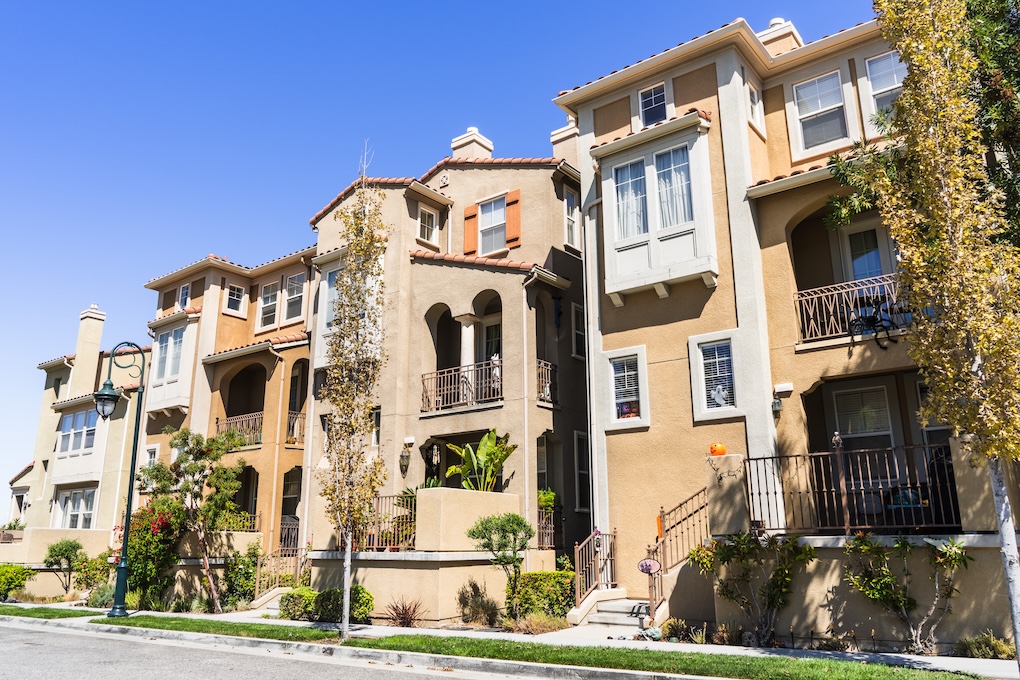
Cool condo, let’s make a deal
Buying a condo has been the next-best-thing to the California dream of a single-family home with a decent-sized backyard and maybe even a white picket fence.
But times are changing. Fast.
With a dramatic increase in homeowners’ insurance rates prompting higher homeowners’ association dues – sometimes to several hundred dollars a month – many would-be condo buyers are looking at buying smaller single-family homes or staying renters.
“HOA dues are just going up and up and up, primarily because insurance costs for homeowners’ associations are going up,” says Redfin agent Alison Williams in Sacramento. “When you buy a $400,000 condo, it often means paying a $500 monthly HOA fee, so for many people, it’s not really that affordable anymore. Some buyers are looking to small single-family homes instead because there’s no HOA.”
CONDO CONCESSIONS SOAR TO 5-YEAR HIGH
The changes are affecting the condo market, with more than half (56%) of condo owners making concessions– often lowering prices – to make a deal work, according to Redfin.
More than three of every five condo deals include concessions in Riverside and Sacramento, with almost 60% in Los Angeles.
California is faring better than much of the nation, where 68% of condo owners are agreeing to deals lower than the listing price, the largest share in five years.
CONDO PRICES HOLD STEADY IN CALIFORNIA
Despite the dramatic increase in concessions – double-digit hikes in three markets (see table, below) – condo prices overall have remained rather sluggish.
The median condo price was $680,630 in March, a 0.8% increase from a year ago, according to the California Association of Realtors. Redfin found condo prices dropped in three of the eight markets surveyed compared to a year ago.
Condo prices are a bargain, at least compared to single-family homes in the state, which cost about $200,000 more. And buyers can ask for concessions, from lower prices to paying points that lower the rate on mortgages.
“The good news if you’re a prospective condo buyer is that sale prices are now falling in some areas, and sellers are offering up concessions, meaning you might be able to get a good deal,” says Redfin senior economist Asad Khan. “If you’ve been priced out of owning a condo, know that rents are hovering below their pandemic highs thanks to an apartment building boom, so renters may also find success asking for concessions.”
More condo sellers are offering concessions to buyers (Feb. 2025)
| City | % of condos sold below listing price | Median condo sales price | Price compared to a year ago |
|---|---|---|---|
| Anaheim | 52.6% | $750,000 | +3.5% |
| Los Angeles | 59.4% | $699,000 | +11.1% |
| Oakland | 52.2% | $549,000 | -7.7% |
| Riverside | 69.6% | $509,000 | -0.2% |
| Sacramento | 65.3% | $389,900 | +13.0% |
| San Diego | 52.3% | $619,000 | +0.7% |
| San Francisco | 51.9% | $995,000 | -4.5% |
| San Jose | 42.2% | $799,000 | +6.7% |
Source: Redfin

For more first-time buyers, the American dream starts at $1 million
Being a first-time buyer in many cities has become an even bigger challenge, as more entry-level homes top the million-dollar mark.
Starter homes cost at least $1 million – and likely often more – in 233 cities nationwide, including 113 in California, according to a new Zillow report. The figure is almost three times more than the 85 cities where $1 million was needed to purchase a starter home in 2020.
But a critical housing crunch has created the million-dollar madness.
California, already one of the most expensive markets in the nation, has more than doubled the number of $1 million-plus starter home markets compared to 2020.
San Francisco has the most million-dollar starter cities at 43, followed by Los Angeles at 34. The San Jose-area had 16.
New York has 32 cities where starter homes cost at least $1 million, while next-door neighbor New Jersey had the third-most at 20. Florida and Massachusetts tied for fourth place with 11.


